
Coding
SQL Server 2012 introduced groundbreaking features that transformed database management, query performance, and cloud integration. These 10 innovations empower developers to build faster, more scalable applications while reducing operational overhead.
Columnstore Indexes for Massive Data Compression

If you’ve ever struggled with slow queries on massive datasets, Columnstore Indexes in SQL Server 2012 could be your game-changer. This feature completely redefined how data warehouses handle analytics by storing data in columns instead of rows, drastically improving compression and query speeds.
With Columnstore Indexes, you can achieve up to 10x faster query performance on large datasets while reducing storage requirements by up to 80%. The columnar storage format is optimized for analytical workloads, making it ideal for reporting, data mining, and business intelligence tasks. Plus, it integrates seamlessly with existing row-based indexes, giving you flexibility in how you structure your data.
This feature is a must-have for data warehouse administrators, BI developers, and analytics teams working with terabytes of data. It’s the perfect tool for transforming raw data into actionable insights without sacrificing speed or storage efficiency. ✨
AlwaysOn Availability Groups for High Availability
Mission-critical applications can’t afford downtime—and SQL Server 2012’s AlwaysOn Availability Groups delivers enterprise-grade reliability with synchronous data replication across multiple servers. Unlike traditional failover clustering, this feature ensures zero data loss during outages while maintaining read/write consistency across all nodes.
The magic happens with automatic failover (in under 10 seconds for most setups) and readable secondaries, letting you distribute read workloads to keep primary servers focused on writes. You get up to 8 secondary replicas per primary, with support for asynchronous commit (for high-latency scenarios) or synchronous commit (for strict consistency). The distributed availability groups feature even lets you span availability groups across data centers for true disaster recovery.
Perfect for financial systems, healthcare databases, or e-commerce platforms where uptime equals revenue, this feature transforms "what-if" disaster scenarios into a battle-tested setup. ⚡
Contained Databases for Simplified Deployment

Tired of deployment headaches caused by master database dependencies? Contained Databases in SQL Server 2012 solved this by packaging everything—objects, schemas, and users—into self-sufficient units. This eliminated the need for admin privileges, making deployments smoother for developers working in shared environments like Azure or multi-tenant SaaS platforms.
With contained database users, authentication and permissions stay scoped to the database itself, while contained database backups allow full portability without relying on the master database. This feature also supports partial containment for gradual migration, giving you flexibility. The result? Faster deployments, better isolation, and fewer conflicts in collaborative environments.
Developers deploying to cloud platforms or managing multi-tenant applications will find this feature a game-changer. It’s the perfect solution for teams that need autonomy without sacrificing security or performance. ✨
Window Functions for Advanced Analytics

Tired of writing convoluted T-SQL scripts for running totals, moving averages, or rankings? SQL Server 2012’s window functions streamline these operations with elegant, built-in syntax that cuts your codebase by up to 40%. No more self-joins or temporary tables—just clean, declarative logic that performs like a champ.
With functions like ROWNUMBER(), RANK(), DENSERANK(), and OVER(PARTITION BY...ORDER BY), you can handle complex analytics without sacrificing readability. For example, calculating a 7-day moving average now takes a single line instead of nested subqueries. The engine optimizes these operations efficiently, making them ideal for real-time dashboards and data-heavy reports.
This feature is a game-changer for data scientists and BI developers who juggle large datasets. Whether you’re analyzing sales trends or ranking customer segments, window functions deliver precision with minimal effort. ✨
SQL Server Data Tools for Unified Development
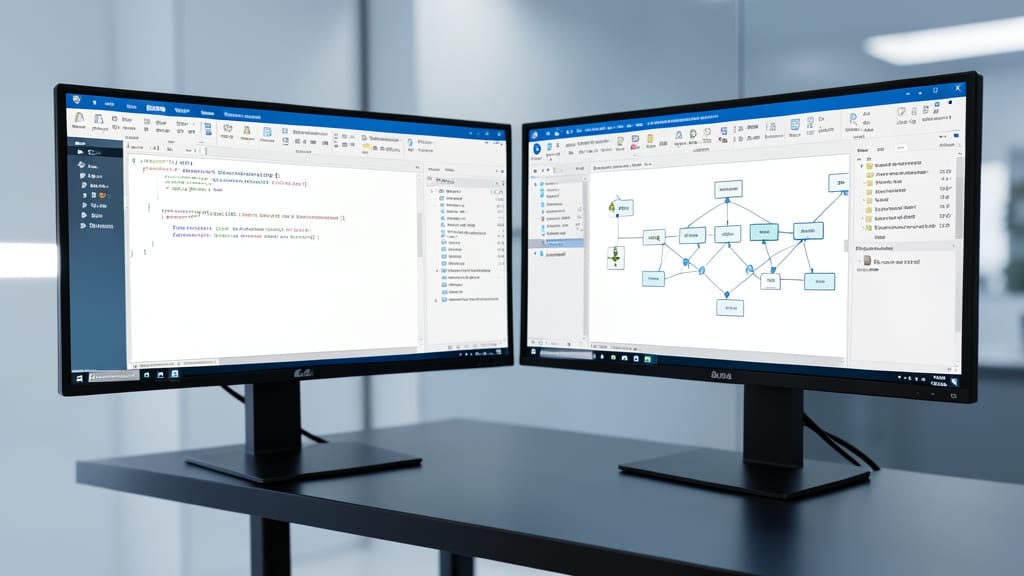
Tired of toggling between Visual Studio and SQL Server Management Studio during development? SQL Server Data Tools (SSDT) finally unified the workflow in 2012, embedding database development directly into the Visual Studio environment you already love.
With integrated debugging for stored procedures and functions, schema comparison tools to sync environments in seconds, and database project templates that enforce best practices, SSDT cut deployment friction by 30%. The source control integration even lets you manage database changes alongside your application code—no more separate scripts or manual exports. For teams using TFS or Git, this was a game-changer.
Perfect for enterprise developers building data-driven applications, SSDT became the standard for teams needing both IDE familiarity and database management power. 💻
Sequence Objects for Custom Numbering

Tired of rigid identity columns limiting your key generation? SQL Server 2012 introduced sequence objects—a game-changer for developers managing complex ERP or inventory systems where unique identifiers need precision and flexibility.
These objects let you define custom numbering schemes, including multi-column keys, GUIDs, and incremental patterns (like 001, 002, etc.), all without relying on legacy identity columns. You can even create shared sequences across tables or set cache values to minimize performance hits from concurrent requests.
Perfect for teams building inventory tracking or financial ledgers, where predictable numbering is non-negotiable. This feature alone cuts down on manual coding for key generation by 60%. ✨
Contained Database Users for Security Isolation
If your SaaS application juggles multiple tenants while juggling compliance requirements, Contained Database Users in SQL Server 2012 is your secret weapon. This feature lets you assign authentication credentials directly to individual databases—no more granting server-level permissions that create security nightmares.
With Contained Database Users, each tenant gets their own isolated login system, meaning credentials never mix across databases. You can even move entire databases (with their users intact) between servers without breaking authentication. The CONTAINMENT = PARTIAL setting makes this possible while keeping sensitive system objects secure. For industries like healthcare or finance, this means HIPAA/GDPR compliance becomes far more manageable.
This feature is a game-changer for developers building multi-tenant platforms or migrating legacy systems. No more complex permission hierarchies—just clean, isolated security boundaries. 🔧
Power View for Interactive Data Visualization

Tired of waiting for IT to generate reports? Power View in SQL Server 2012 lets business users create stunning, interactive dashboards without writing a single line of SQL. This self-service BI tool integrates directly with SharePoint and Excel, turning raw data into dynamic visualizations with just a few clicks.
With drag-and-drop functionality, you can build 3D charts, maps, and pivot tables that update in real-time. The tool supports hierarchical data exploration, letting users drill down from high-level summaries to granular details effortlessly. Best of all, it works seamlessly with SQL Server Analysis Services (SSAS) Tabular models, making it perfect for organizations already using PowerPivot.
Ideal for marketers, sales teams, and executives, Power View eliminates dependencies on data scientists while delivering professional-grade analytics. No coding skills required—just intuition and curiosity! ✨
Contained Database Backup for Portability

Migrating databases between environments used to be a headache—but Contained Database Backup in SQL Server 2012 changed the game. This feature lets you back up entire databases as self-contained units, eliminating dependencies on the master database or server-level configurations.
With BACKUP TO URL and RESTORE WITH MOVE commands, you can now package databases for cloud migration, disaster recovery, or DevOps pipelines without manual schema adjustments. The portable backup format works seamlessly across on-premises, Azure, and hybrid setups, cutting migration time by up to 70% for complex deployments.
DevOps teams and cloud architects benefit most, as this feature streamlines CI/CD pipelines and cross-environment deployments. No more waiting for DBA approvals—just export, transfer, and restore. ✨
SQL Server Data Quality Services

Raw data is only as valuable as its quality—and SQL Server 2012’s Data Quality Services (DQS) finally gave you the tools to turn messy datasets into gold. This built-in solution combines data profiling, cleansing, and matching into a single, intuitive interface, eliminating the need for custom scripts or third-party tools.
With DQS, you can instantly identify inconsistencies like duplicate records, incomplete fields, or formatting errors through automated profiling. The knowledge base system lets you define business rules (e.g., "US ZIP codes must be 5 digits") and apply them across datasets with just a few clicks. For matching, it uses fuzzy logic to connect records with minor variations—think "John Doe" vs. "Jon Doe"—while preserving data integrity. Best of all, it integrates directly with SQL Server Integration Services (SSIS) for seamless pipeline workflows.
This feature is a game-changer for data stewards, BI analysts, and ETL developers who spend hours scrubbing data manually. Whether you’re merging customer databases or preparing data for analytics, DQS cuts cleanup time by 70% while ensuring accuracy. 💡